Best
Pilates Studio Software - Starting at ₹699/month

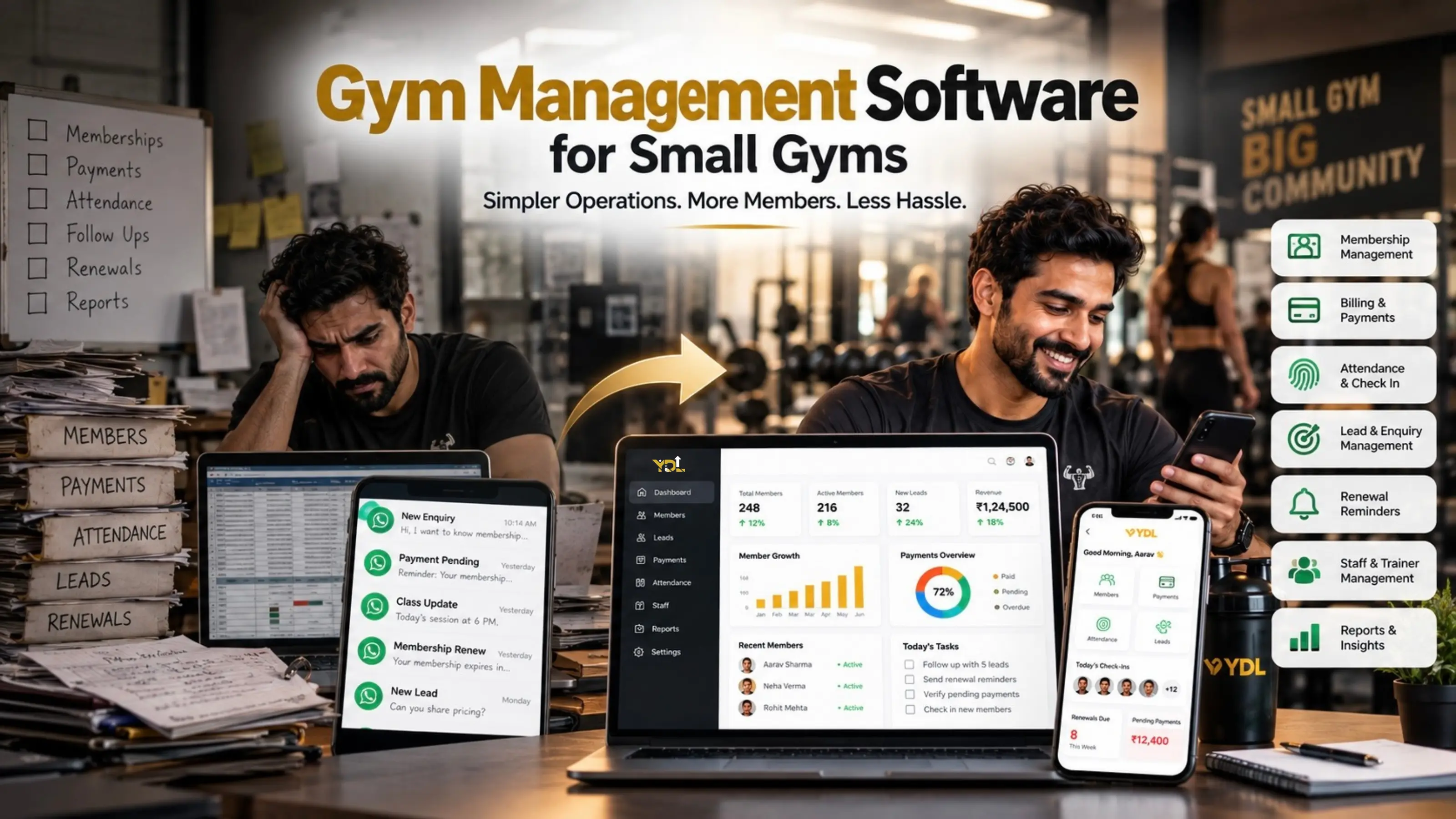
Running a small gym does not mean running a simple business. You still have memberships to manage, payments to collect, attendance to track, leads to follow up with, and renewals that cannot be missed. When all of this is handled through registers, spreadsheets, WhatsApp messages, and separate payment records, small tasks can quickly become a daily headache.
Gym management software for small gyms brings these activities into one system. It can help manage members, payments, attendance, leads, renewals, and everyday gym operations without requiring a large team or complicated setup. For a broader overview, see Your Digital Lift's gym management software.
The real question is not whether your gym is big enough for software. It is whether your current way of managing the gym is costing you time, missed payments, or lost follow ups.
Key Takeaways
Does a Small Gym Really Need Management Software?
Not necessarily. If you have a small number of members and can easily keep track of payments, attendance, enquiries, and renewals manually, software may not be an immediate priority. The problem starts when manual management becomes difficult to control. You may have a spreadsheet for member details, a notebook for attendance, WhatsApp chats for payment reminders, and another file for leads. None of these systems necessarily talk to each other. That creates simple but expensive problems. A member's payment may be missed. A lead may never receive a second follow up. A membership may expire without a reminder. Staff may spend time searching through records instead of helping members.
If you are comparing options, start with How to choose gym management software and use it as a practical buying checklist.
What Should Gym Management Software for Small Gyms Include?
A small gym does not need every feature available in an enterprise fitness platform. It needs the features that solve its most frequent problems.
Membership Management
The software should give you a central record for every member. This can include member details, membership plan, start and expiry date, payment history, membership status, renewal information, and trainer or plan details where relevant. Instead of checking different registers or spreadsheets, staff can find the member's information in one place.
Billing and Payment Tracking
Payment management is one of the most practical reasons to move away from manual records. A useful system should help you see who has paid, who has pending dues, when a payment was made, which membership the payment belongs to, receipts and invoices, and online payment options. For gyms in India, it is also worth checking whether the software supports payment methods your members already use, such as UPI. If your gym needs GST invoices, check exactly how invoicing is handled before choosing a platform.
Attendance and Check In
A member walking into your gym should not require a slow manual process every time. Depending on the software, attendance may be recorded through QR codes, biometrics, or other digital check in methods. Digital attendance gives you a record that can be connected to member information and used to understand attendance patterns.
Lead and Enquiry Management
Getting enquiries is only the first step. The next question is whether those enquiries are being followed up. A gym management system can help record new leads, track their status, and make sure prospects do not disappear into an old WhatsApp conversation or notebook.
Renewal and Expiry Reminders
Membership renewals directly affect recurring revenue. A system should make it easier to identify memberships that are about to expire and payments that are still pending. Automated reminders can reduce the need for staff to manually check every member and send individual messages.
Staff and Trainer Management
Even a small gym may have multiple trainers or front desk employees. Depending on your requirements, software can help manage staff access, attendance, trainer information, and responsibilities. Choose only the functions you actually need.
Reports and Business Insights
Reports should help answer practical questions such as how much revenue was collected, which payments are pending, how many memberships are expiring, how many leads converted, what member attendance looks like, and which memberships were renewed.
How Gym Software Helps a Small Gym Save Time
Replace Registers and Spreadsheets
With manual systems, the same member information may exist in several places. A digital system can bring membership, payment, attendance, and lead information together.
Reduce Payment Follow Ups
Instead of manually checking payment records every day, a gym can use software to identify pending payments and trigger reminders where supported.
Automate Member Communication
Membership expiry reminders, payment reminders, receipts, and routine notifications do not always need to be written manually.
Keep Gym Information in One Place
A useful way to think about gym management software is as a member lifecycle: LeadMembershipPaymentAttendanceRenewal.
What Should a Small Gym Look for Before Buying Software?
Ease of Use
Do not judge software only by how many features it has. Ask whether your front desk staff can use it without constant help.
Pricing and Total Cost
Look beyond the monthly subscription. Check for setup charges, data migration fees, payment processing charges, hardware requirements, additional staff accounts, extra branch charges, and paid add ons.
Payment Integrations
Indian gyms should check how the software handles local payment workflows. Look for support for relevant payment methods, payment gateways, UPI, receipts, and invoicing.
Mobile Access
Gym owners are not always sitting at the front desk. Mobile access can make it easier to check business information, member details, payments, or reports while away from the gym.
Customer Support and Onboarding
Ask whether the provider helps with data migration, initial setup, staff training, troubleshooting, and ongoing support.
Scalability
Your gym may be small today and have more members, trainers, or locations later. Choose software that can handle growth without forcing you to change systems again.
Common Mistakes Small Gyms Make When Choosing Software
Is Affordable Gym Management Software Enough for a Small Gym?
It can be, provided it covers the right requirements. A small gym usually does not need enterprise level functionality simply because it exists. What matters is whether the software can handle the operations that matter to your business.
Your Digital Lift currently offers gym management software with features such as membership management, billing, attendance, lead management, WhatsApp automation, and payment integrations.
Pricing and included features should always be checked on the current pricing page before purchasing because plans can change.
How to Choose the Right Gym Management Software for Your Small Gym
Identify your biggest problem. Is it payment collection, attendance, renewals, leads, or keeping member records organized?
List your essential features. Start with what your gym actually needs.
Test the payment workflow. Check how payments, pending dues, receipts, invoices, and online payments are handled.
Test attendance. Make sure check in is quick enough for your busiest gym hours.
Test renewal reminders. See how the system identifies upcoming expiries and communicates with members.
Test lead management. Check whether staff can easily add, follow up with, and update prospects.
Calculate the total cost. Include subscription fees, payment charges, hardware, setup, and additional features.
Ask about support. Find out how onboarding, migration, training, and technical support work.
Test it with your staff. The people who will actually use the system should be involved in the decision.
Think about the next stage of your gym. Choose software that can accommodate more members and staff as the business develops.
Here is a guide to choose a Gym Management Software
Frequently Asked Questions
The right software depends on your gym's size, operational needs, budget, payment methods, and growth plans. Compare platforms based on the features your gym will actually use.
Pricing varies by provider and plan. Some platforms charge a monthly subscription, while others may use annual, member based, or customised pricing. Check the complete cost, including setup, payment fees, hardware, and additional features.
It can be worthwhile when manual processes are taking significant time or causing missed payments, renewals, leads, or member records. The value depends on whether the software solves a real operational problem.
Yes. Gym management systems can track payment history, pending dues, membership expiry dates, and renewals. Some also support online payments and automated reminders.
Yes. Depending on the platform, attendance can be recorded through methods such as QR codes or biometric systems. Check which attendance methods are included before choosing software.
That depends on the platform. Small gyms should prioritize simple workflows, clear dashboards, mobile access, onboarding, and staff training.
Yes, if the platform is designed to scale. Check whether it can handle additional members, staff, trainers, branches, and reporting requirements before subscribing.
Final Thoughts
A small gym does not need complicated software. It needs a system that makes everyday work easier.
If your team is spending too much time checking registers, chasing payments, tracking renewals, updating spreadsheets, or following up with leads, gym management software can bring those processes into one place.
Start with your problems, define the features you actually need, calculate the total cost, and test the software with the people who will use it every day. You can explore Your Digital Lift's gym management software to see the current product offering.
Explore More from YDL
Run A Small Gym?
Manage members, payments, attendance and renewals in one simple system.
Schedule A Demo