Best Pilates Studio Software - Starting at ₹699/month
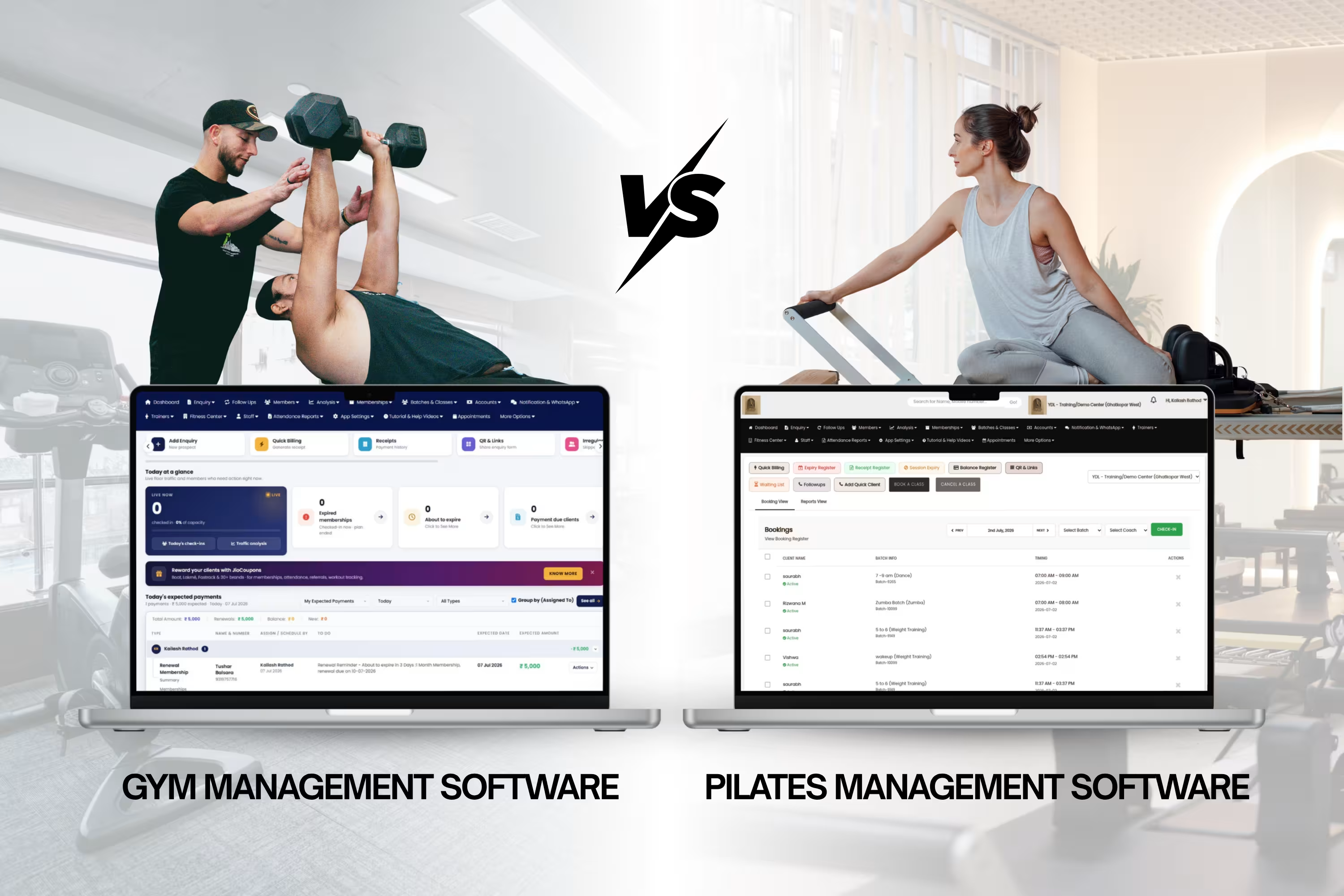
Here's a question worth asking before you sign another 12-month software contract: would you run a five-star boutique hotel using the same booking system as a budget hostel? Probably not — the room types, pricing tiers, and guest expectations are completely different. Yet that's exactly what happens when Pilates studios use generic gym management software.
Gym software and Pilates studio software are often lumped into the same category because, at a glance, they do similar things — bookings, billing, attendance. But the businesses behind them are built on completely different logic. And that mismatch is usually invisible until the studio starts growing, and the cracks in the "generic" system start costing real money.
The Root Problem: Two Different Business Models
Generic gym software is designed around open-access training — members pay a flat fee and show up whenever they want, using whatever equipment is free. There's no hard capacity limit, no premium service layer, and no complex pricing logic to manage.
Pilates studios run on the opposite model:
- Hard capacity limits. A reformer class might fit six to ten people, max. Overbook by even one, and you either turn someone away or crowd the room.
- Layered pricing. Mat, reformer, and private sessions are usually priced, packaged, and billed differently — sometimes as credits, sometimes as memberships, sometimes both.
- A boutique, high-touch brand experience. Clients pay a premium expecting a premium feel — not a shared app that looks like it was built for a budget gym chain.
When software isn't built around these realities, studio owners end up doing the "adjusting" manually — which defeats the entire purpose of using software in the first place.
Where Generic Gym Software Quietly Breaks Down
Class capacity becomes a guessing game
Most gym platforms weren't built to track per-machine or per-slot limits. Studios often end up manually monitoring reformer bookings on a side spreadsheet just to avoid double-booking equipment.
Pricing gets forced into the wrong shape
Flat monthly memberships are the default in gym software. Tiered Pilates pricing — pay-per-class, credit packs, private session add-ons — usually has to be hacked together, creating billing errors and client confusion.
The client experience feels off-brand
A generic, shared gym app doesn't reinforce a boutique studio's identity. For a business built on premium positioning, that mismatch quietly undercuts retention.
Instructor tracking is an afterthought
Batch-wise attendance, per-instructor rosters, and performance visibility across formats (mat, reformer, private) are standard needs in Pilates — but rarely built well into gym-first platforms.
Growth data doesn't reflect Pilates metrics
Class fill rate, occupancy by format, and instructor performance matter more to a Pilates studio than raw gym-style "check-in counts." Generic dashboards often don't surface what actually drives your revenue.
What Purpose-Built Pilates Software Gets Right
Software designed specifically for Pilates studios — like YDL's Pilates Studio Software — flips this entire equation:
- True capacity-aware booking, with live seat tracking for mat, reformer, and private formats
- Flexible, tiered pricing and packages that match how Pilates studios actually charge clients
- A fully white-labeled client app — your logo, your colors, your brand, not a shared generic interface
- Automated WhatsApp and email reminders that cut no-shows without adding admin work
- QR and biometric check-in to eliminate front-desk bottlenecks during peak hours
- Instructor-specific rosters and performance tracking for accurate, error-free payroll
- Studio-specific analytics — occupancy, retention, and instructor performance, not generic gym metrics
The difference isn't cosmetic. It's the difference between software that adapts to your studio and a studio that has to adapt to its software.
Frequently Asked Questions
The Bottom Line
Generic gym software isn't "bad" — it's just built for a different kind of business. Pilates studios operate on tighter capacity limits, layered pricing, and a premium brand experience that generic tools weren't designed to support. Choosing software built specifically for Pilates isn't about chasing more features — it's about finally using a system that matches how your studio actually runs.
Curious What This Looks Like For Your Studio?
Book a private demo and see the difference in real time — no generic walkthrough, no pressure.
Book A Private Demo